Best Cursive Font for Tattoo - 10 Readable Picks
Find the best cursive font for tattoo ideas, compare 10 readable script styles, avoid fonts that blur, and preview your words before ink.
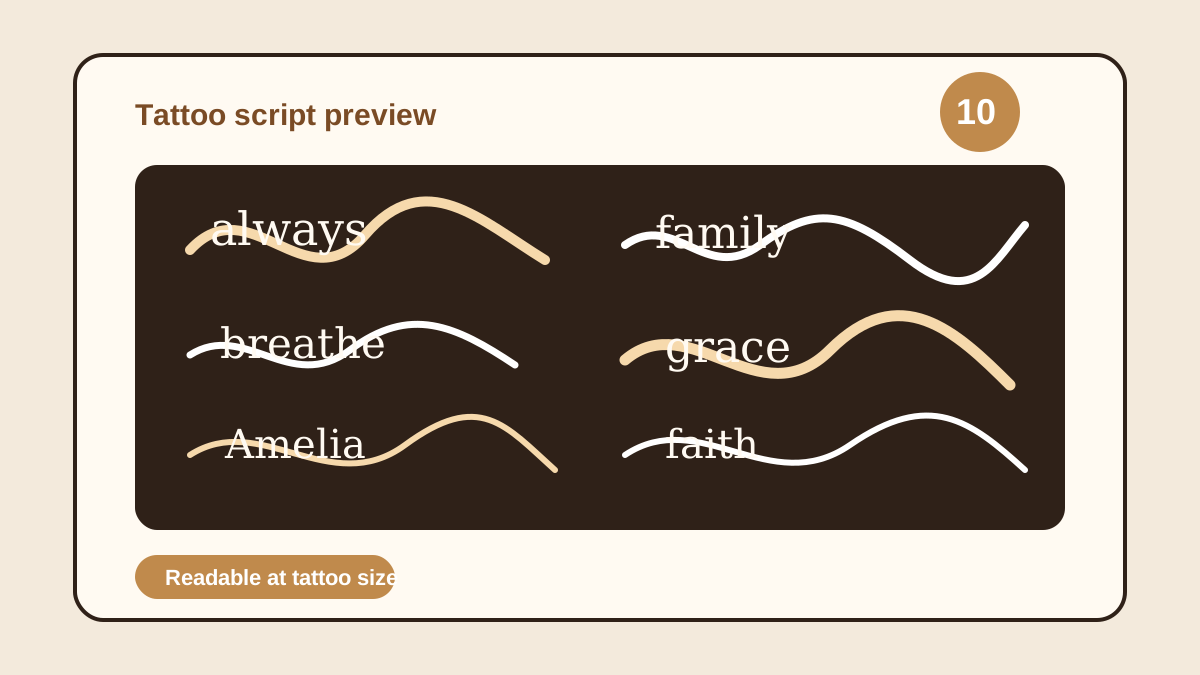
The best cursive font for tattoo lettering is readable at the size you want, simple enough to age well, and personal enough to match the meaning of the words. A font can look beautiful on a screen and still fail on skin if the hairlines are too thin or the loops are too tight.
Use this guide to choose a script style before you talk with your tattoo artist. Then preview your exact word or phrase in the cursive tattoo generator.
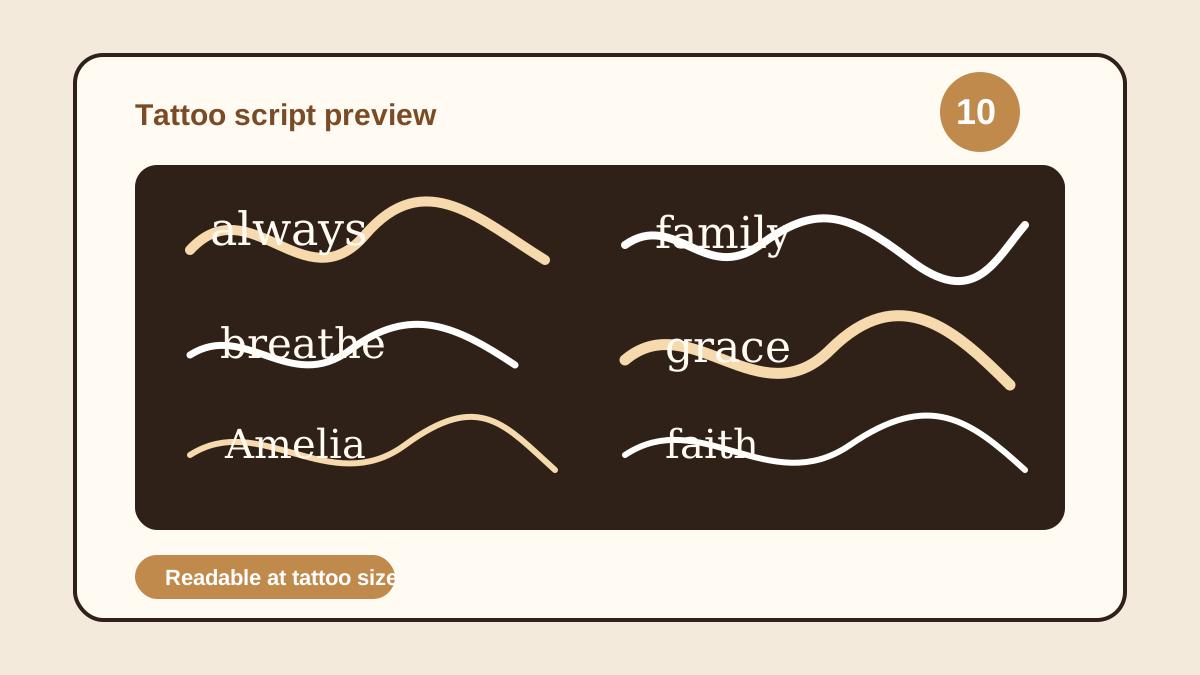
10 Best Cursive Fonts for Tattoos
These font directions are useful starting points. Your artist may redraw the final lettering for placement, size, and skin movement.
1. Classic Spencerian - elegant names and dates
Spencerian-style cursive works well for names, dates, and short memorial lines. It has graceful slant and recognizable letterforms.
Aging consideration: keep the entry strokes and exit strokes a little heavier than the digital preview. Very fine Spencerian hairlines can soften over time.
Example: "Amelia 1998" on inner forearm, collarbone, or rib placement.
Try it in the cursive tattoo generator before choosing the final size.
2. Modern Signature Script - personal word tattoos
Signature-style cursive is best for one word with personal meaning, such as "breathe," "faith," or a loved one's name.
Aging consideration: avoid over-compressed letters. If the word looks tight at phone-screen size, it will likely blur at small tattoo sizes.
Example: "always" near the wrist or ankle.
3. Bold Brush Script - short quotes
Brush script gives stronger strokes and better visibility than delicate calligraphy. It works for short phrases where readability matters.
Aging consideration: bold strokes age better, but counters inside letters like e, a, and o must stay open.
Example: "stay wild" across the upper arm.
4. Minimal Monoline Script - small tattoos
Monoline cursive uses an even stroke width. It is one of the safest choices for small tattoos because it avoids fragile hairlines.
Aging consideration: do not make it too tiny. Even monoline lettering needs enough spacing between loops.
Example: a child's name behind the ear or on the wrist.
5. Vintage Calligraphy - formal memorial tattoos
Vintage calligraphy fits memorial text, vows, and meaningful dates. It feels more formal than casual handwriting.
Aging consideration: simplify flourishes. Long decorative swashes can compete with the words and lose shape over time.
Example: "in loving memory" with a date below.
6. Feminine Fine Script - delicate placements
Fine script is popular for collarbone, rib, and shoulder tattoos. It can look refined when the phrase is short.
Aging consideration: this style needs careful sizing. Ask your artist whether the line weight is realistic for your placement.
Example: "grace" on the collarbone.
7. Old English Cursive Mix - dramatic initials
For initials or one-word pieces, a script that borrows from Old English forms can add weight and drama.
Aging consideration: keep it to initials or very short words. Long phrases become hard to read quickly.
Example: intertwined family initials on upper arm or chest.
Preview a heavier style with the Old English cursive generator.
8. Chicano Script - bold name tattoos
Chicano-inspired script is strong for names, family words, and large placements. It usually needs more room than delicate cursive.
Aging consideration: this style depends on sharp contrast and clean negative space. Do not squeeze it into a small wrist tattoo.
Example: "Familia" across the forearm.
Use the Chicano cursive generator for visual direction before bringing the idea to an artist.
9. Simple Handwritten Cursive - readable first tattoos
Simple handwritten cursive is a practical choice for first tattoos because it stays personal without too much ornament.
Aging consideration: choose steady spacing and medium stroke weight.
Example: "no rain, no flowers" on the outer forearm.
10. Calligraphy Script - wedding vows and romantic text
Calligraphy script works for vow excerpts, partner names, and romantic phrases.
Aging consideration: reduce the contrast between thick and thin strokes. Tattoo ink is not a pointed pen.
Example: "to the moon" on ribs or upper arm.
How to Choose a Cursive Tattoo Font
Start with the words, not the font. A one-word tattoo can handle more flourish than a full quote. A long phrase needs clear spacing, moderate slant, and simple capitals.
Check these details before committing:
- Size: small lettering needs simpler forms.
- Placement: curved areas can distort long words.
- Spacing: loops and counters need room.
- Line weight: thin strokes can fade or blur.
- Meaning: formal words often suit classic script; casual words suit handwritten styles.
Try Your Words in 20+ Tattoo Font Styles
Preview names, quotes, dates, and short phrases in cursive tattoo lettering before you bring the idea to your artist.
Open free tool →Fonts to Avoid
Avoid fonts that look impressive only because they are extremely thin, extremely complex, or tightly connected. A tattoo has to live on moving skin, not a static screen.
Be careful with:
- Very thin hairline scripts.
- Dense flourishes around every capital.
- Words where e, a, and o close up.
- Fonts that make different letters look identical.
- Long phrases in highly ornamental calligraphy.
If you cannot read the design at a glance, simplify it.
Try Your Words in 20+ Fonts
The safest next step is to test the exact text. A font that works for "Love" may not work for "Alexandria" because the loops, joins, and descenders are different.
Open the cursive tattoo generator, type your word or phrase, compare multiple script fonts, and save the clearest options for your tattoo consultation.
Frequently Asked Questions
What is the most readable cursive tattoo font?
Minimal monoline script and simple handwritten cursive are usually the most readable choices, especially for small placements.
Are thin cursive tattoos a bad idea?
Not always, but very thin strokes can fade or soften. Ask your artist what line weight will age well for your placement.
Should a tattoo artist redraw the font?
Often, yes. A generator helps you compare styles, while the artist adjusts spacing, size, and line weight for skin.
What words work best in cursive tattoos?
Names, dates, single-word reminders, and short quotes work best. Long paragraphs are harder to keep readable.
Related Guides
Want to try these styles on your own text? The cursive generator previews any word across every font on the site and exports a transparent PNG or SVG.