Why Is Cursive Important? Benefits That Still Matter
Why is cursive important in 2026? Explore research-backed handwriting benefits, practical reasons to learn cursive, and simple ways to start practicing.
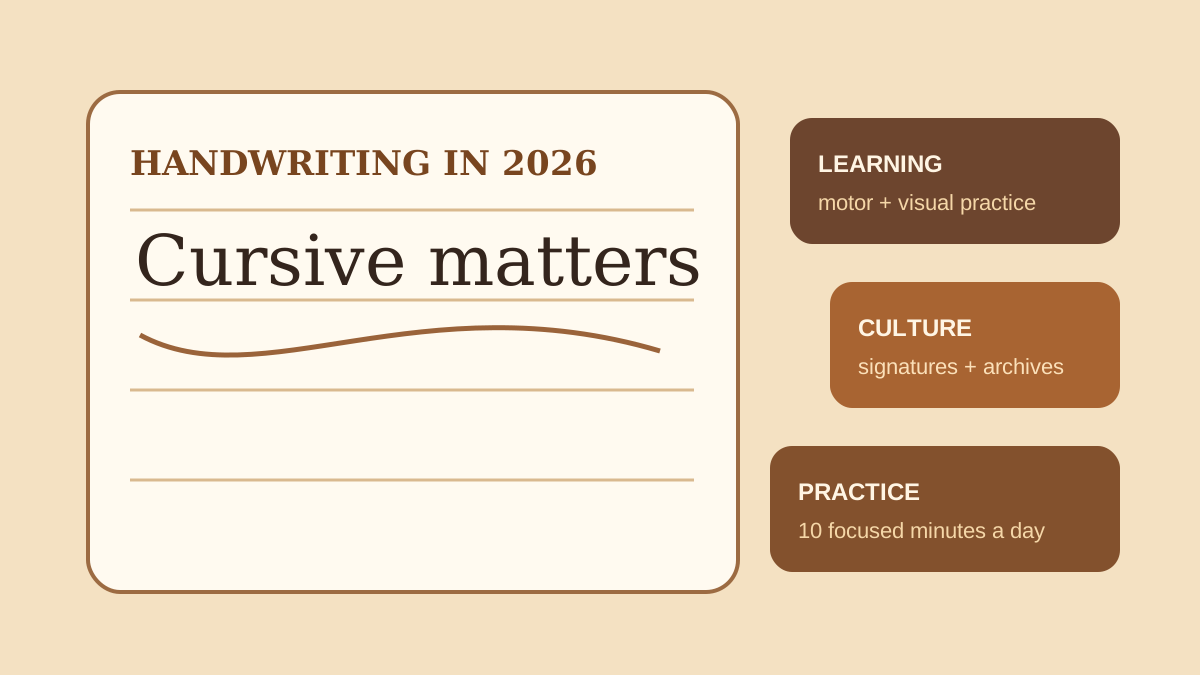
Why is cursive important when students type more than ever? The honest answer is not that cursive replaces keyboards. It does not. Cursive remains useful because handwriting is a distinct learning activity, connected writing can become an efficient personal skill, and older handwritten sources still matter.
Cursive's Decline and Return
The Common Core State Standards did not specifically require cursive instruction, and many schools reduced the time devoted to it. The picture changed again as states added handwriting laws and standards. In 2026, more than two dozen states require cursive instruction or include it in statewide expectations. See our 2026 state-by-state guide for the current list.
That return does not mean every student needs ornate penmanship. A practical goal is simpler: write legibly, read common cursive forms, and gain enough fluency that handwriting does not interrupt thinking.
The Neuroscience of Handwriting
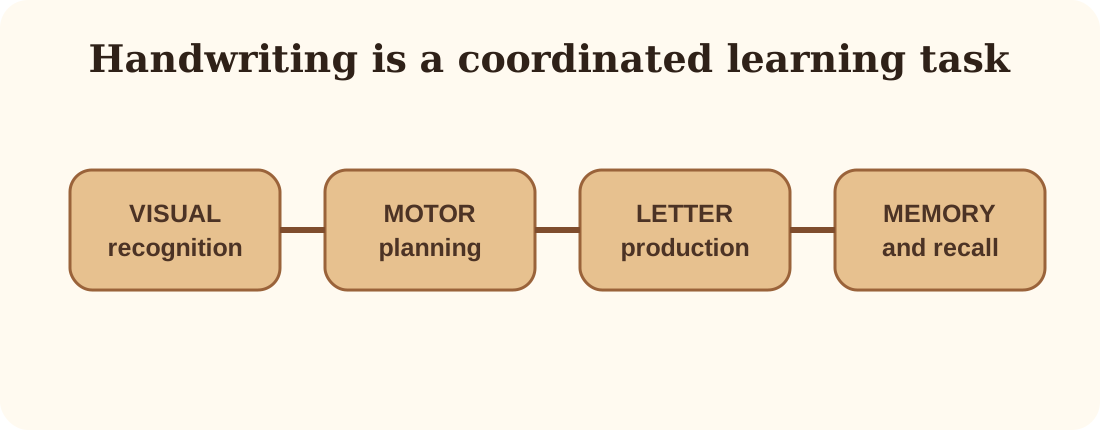
Handwriting asks the brain to coordinate visual recognition, motor planning, touch, and repeated production of letter shapes. Typing is valuable too, but pressing a key is a different motor task from forming a letter.
Research should be described carefully: many studies compare handwriting with typing or tracing, not cursive with every other handwriting style. The strongest claim is that handwriting practice has learning value. Cursive can be one age-appropriate way to keep that practice fluent and meaningful.
Cognitive Benefits Backed by Research
Three useful studies explain why educators continue to care about handwriting:
- A 2013 fMRI study of seven-year-old children found that actively writing newly learned cursive letters recruited sensorimotor networks more than passively watching someone write them. Read the PubMed abstract.
- A 2015 study of preliterate children found that letter perception recruited a reading-related brain circuit after handwriting practice, but not after typing or tracing the same letters. Read the PubMed abstract.
- A 2024 EEG study reported more widespread brain connectivity during handwriting than typewriting in university students. Read the PubMed abstract.
These studies support regular handwriting practice. They do not prove that every learner must use one cursive curriculum. The right teaching approach still depends on age, motor development, and classroom goals.
Cultural and Practical Reasons
Cursive also matters outside the lab:
- Historical access: letters, archival records, and family documents are often handwritten.
- Signatures: a readable personal signature remains useful for forms and everyday identity.
- Fast notes: some writers find connected letters efficient once the movement becomes automatic.
- Personal expression: handwriting gives students a durable, low-tech way to compose and reflect.
Adults returning to cursive often start with signatures. Our cursive signature guide explains how to build a readable style without turning it into formal calligraphy.
How to Reintroduce Cursive
Keep practice short and repeatable:
- Start with five basic strokes and lowercase letter families.
- Practice for 10 to 15 minutes rather than one long weekly session.
- Use words the learner already knows, such as names and simple sentences.
- Add capitals after lowercase joins feel comfortable.
- Use one handwriting model consistently before comparing styles.
Read how to write in cursive for the full beginner sequence, then make a worksheet for the next practice session.
Start with a Free Cursive Worksheet
Create printable tracing lines for a name, word, or short sentence. Use one focused worksheet for a 10-minute practice session.
Open free tool →Frequently Asked Questions
Why is cursive important for students?
Cursive gives students another way to practice handwriting fluency, read common handwritten sources, and develop a legible personal writing style.
Does cursive improve the brain?
Research supports benefits from handwriting practice compared with typing or passive observation. It is more accurate to say handwriting engages learning-related networks than to claim cursive alone transforms the brain.
Is cursive more important than typing?
No. Students benefit from both. Typing supports modern communication; handwriting supports letter formation, note-taking, and access to handwritten material.
At what age should children learn cursive?
Many US curricula introduce cursive in elementary school, often around grades 2 to 5. Follow the learner's school sequence and motor readiness.
Where can beginners practice?
Use the cursive worksheet generator, the alphabet chart generator, and our D'Nealian vs Zaner-Bloser comparison.
Every style shown in this guide is also available in our cursive generator, alongside the copy-paste output and image downloads.